
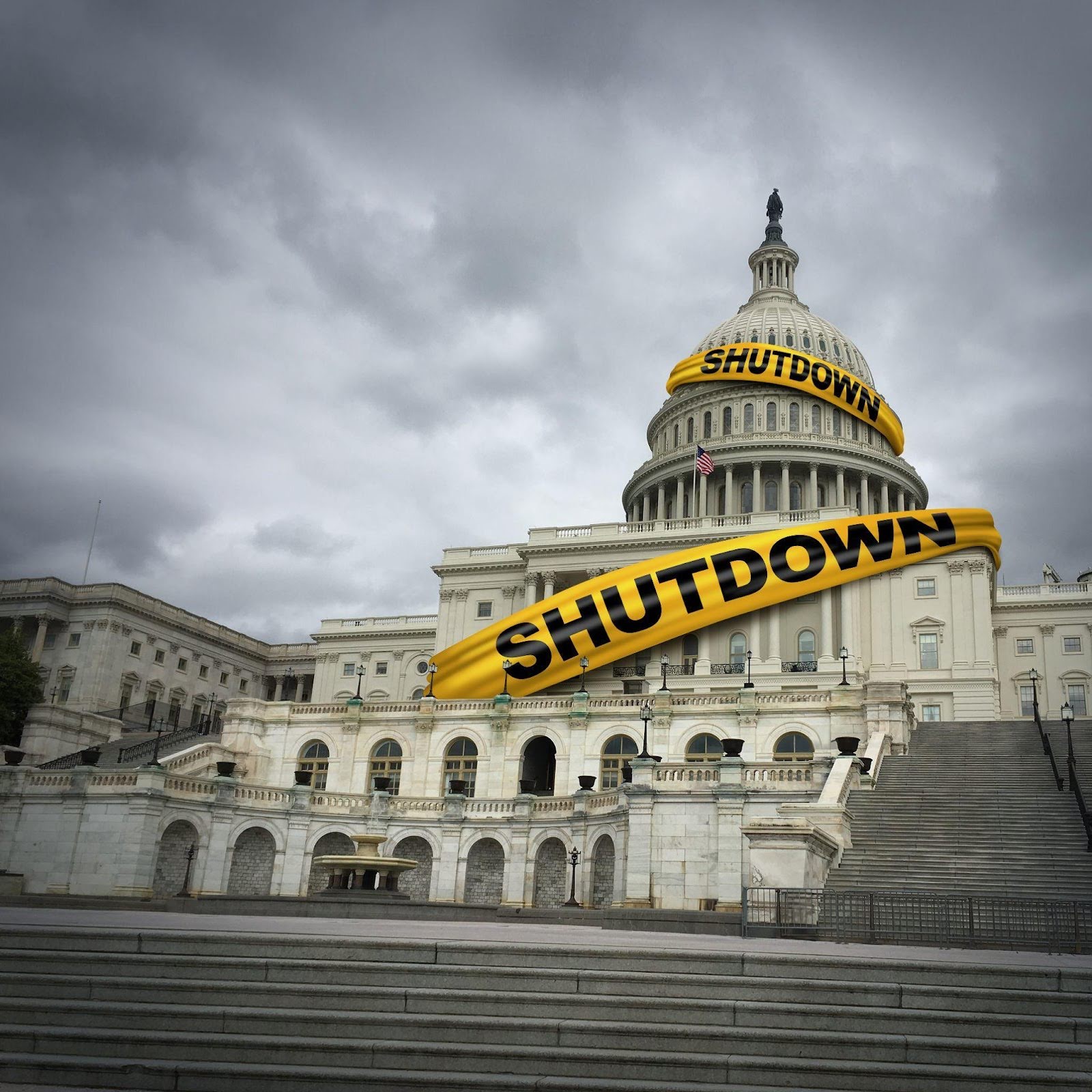
When federal paychecks disappear, the shock doesn’t stop at the Beltway. It lands on the doorsteps of the region’s property owners, those who rent out their rowhouses in Petworth, condos in Crystal City, and homes stretching into Montgomery and Prince George’s counties. Landlords depend on steady rent from tenants employed by the very institutions that are now downsized or worse, shuttered.
This fall, Washington’s economic identity is being tested once again. Thousands of federal workers who accepted “deferred resignation” packages will soon lose their income altogether. And with a long government shutdown looming, even those still on the payroll face delayed paychecks. For landlords, that combination of uncertainty and sudden income loss threatens to unsettle a rental market already balancing on the edge.
A Test of Resilience
Rosie Allen-Herring, president of United Way of the National Capital Area, recently told The Washington Post, “This region stands to take a hard hit from those who are no longer employed but can’t find new employment and now find themselves in need. It’s a full-circle moment to be a donor and now find yourself in need, but it is very real for this area.”1 That reversal captures the broader moment: The D.C. economy built on federal paychecks and charitable giving now faces a stress test of compassion and cash flow alike.
For landlords, adaptability will determine who weathers the storm. Those who are able to keep the rent coming in, retain their tenants or find replacement tenants without the same economic hardships are going to be able to get to the other side with manageable financial disruptions. Those who plan, communicate, and stay financially flexible will keep their properties occupied and their reputations intact.
A Region Built on Federal Pay
Roughly one in ten jobs in the Washington metropolitan area is tied directly to the federal government, according to the Bureau of Labor Statistics. That number climbs sharply when you include contractors, nonprofits, and think tanks dependent on federal funding.
This concentration means that when the federal government sneezes, D.C.’s housing market catches a cold. The Brookings Institution recently reported that since January, the region’s unemployment rate has climbed eight times faster than the national average, and local job growth has flattened.1 More anecdotal, I’ve spoken with property owners this year who are looking to rent out the property they own in DC because they have to move to another region for work.
As The Post observed, “The region has shed federal jobs at a higher rate, and both the number of homes for sale and the share of residents with low credit scores have grown more quickly here than the rest of the country.”1
For landlords, that’s a flashing warning light. When a certain category of tenants with solid compensation lose reliable government salaries and face dim re-employment prospects, rent becomes harder to collect and rent levels can decline year on year.
The Human Side of a Policy Shock
The people behind these statistics are often long-tenured civil servants. The Post profiled former State Department employee Brian Naranjo, who said he had “unsuccessfully thrown his résumé at more than 50 positions since resigning in May.” “It’s terrible,” Naranjo told the paper. “You have far more people going for those very specialized jobs than would normally be out there.”1
Another displaced worker, Jennifer Malenab, a 42-year-old former Department of Homeland Security employee, described canceling daycare and family vacations while she scours job boards. “This is not where you want to be at 42, with a family,” she said.1
When households like these lose steady pay, not only do they pull back on spending, but if they are renters landlords may see a lag in rent receipts, requests for partial payments, or in some cases, a premature notice to vacate. Some tenants will relocate out of the region altogether — a prospect already visible in rising “for sale” listings and increased moving-truck activity in Northern Virginia and suburban Maryland.

What Happens When the Rent Doesn’t Arrive
When rent payments are disrupted, even temporarily, the financial effects can be immediate. Many small landlords depend on rent to cover their mortgages, property taxes, insurance premiums, and routine maintenance. Even a temporary interruption in income can deplete reserves, delay repairs, and strain their ability to meet loan obligations.
Larger multifamily owners are not immune. If multiple tenants in a building lose income at once, cash flow can fall sharply. During the brief 2019 government shutdown, some D.C. landlords offered short-term payment plans to furloughed workers with the expectation of eventual back pay. However, under current conditions, where many positions are being permanently eliminated and paychecks may not be restored, landlords face much greater uncertainty and cannot assume repayment will be guaranteed.
In the District of Columbia, the Rental Housing Commission has advised landlords to continue operating strictly within established legal procedures and to avoid informal or selective payment arrangements that could be interpreted as discriminatory under the D.C. Human Rights Act. Courts in Virginia and Maryland allow temporary continuances when tenants provide documentation of a federal furlough or income disruption, but it is the court, not the landlord, that determines eligibility for relief.
How Landlords Should Proceed 2
- Continue filing nonpayment cases through normal legal channels rather than delaying action.
- Allow the courts to apply any continuance or relief provisions if a tenant qualifies due to federal employment status or income interruption.
- Avoid making selective accommodations based on a tenant’s job type or federal employment status, as this may violate equal-treatment and source-of-income protections.
Landlords with a single tenant or a consistent written policy of offering payment plans to all tenants experiencing verified income disruption should not be at risk of discriminatory treatment.
Vacancy, Concessions, and Shifting Demand
Beyond nonpayment of rent, landlords face a challenge from a different direction: weak demand. As fewer jobs are being created and unemployed or under-employed tenants move out of DC, the supply of available rental units will rise, forcing landlords to compete more aggressively on price and amenities.
Market data already point that direction. The volume of rental listings across the District of Columbia jumped roughly 14 percent year-over-year in September, according to the realtor Multiple Listing Service (MLS) trends, as reported by the Washington Business Journal. Landlords are offering free parking, one-month concessions, or flexible leases to retain quality tenants.
Neighborhoods once buffered by federal stability like Silver Spring, Falls Church, and Alexandria may now see higher tenant turnover. As one Arlington property manager put it, “We used to say federal employees were the safest tenants in America. Now we’re rewriting that rule.”
A Shrinking Workforce, a Softer Market
In addition to the layoffs, the region is contending with a broader identity crisis. “Yesim Sayin, executive director of the D.C. Policy Center, put it bluntly: ‘Beyond federal employment, we relied on tourism. But foreign tourists aren’t coming. And we relied a whole lot on universities bringing talent who would then stay here and be part of our talent pool. And that is kind of gone, too. So what are we now? We just don’t know.’”1
This uncertainty may impact property values and investor sentiment. When employers relocate, renters follow. If enough mid-career professionals leave, demand for rentals will first soften and then we’ll begin to see a lowering of the average rents a landlord can command for their rental. We have already seen this in the current rental market. Rents that seems reasonable a few years ago, are now being discounted by hundreds of dollars. Landlords who are searching for new renters after several years of having tenants are finding that they need to bring rent levels below where they used to be to secure tenants commitments.
Strategies for Landlords: Staying Solvent and Supportive
In times like these, survival depends on both prudence and empathy.
- Communicate early. Encourage tenants to disclose financial hardship before missing payments. Written payment plans, properly documented, can forestall eviction while preserving goodwill.
- Review legal protections. Understand D.C., Maryland, and Virginia rules regarding furlough continuances or income-source discrimination. Seek legal counsel before altering lease terms mid-cycle.
- Build reserves and credit access. Line up a home-equity or business line of credit to bridge shortfalls. Cash on hand always is helpful to have as a buffer for the impact of income disruption.
- Monitor policy developments. State and local governments are supporting people who are affected by the lay-offs. Landlords can benefit indirectly through their renters who are utilizing these programs to assist them in paying their monthly expenses.
- Contact your Congressional representatives to demand the reopening of the federal government. And in D.C., you do benefit from representation, even though they cannot vote. They can influence decisions that matter.
1 Olivia George, Hannah Natanson & Meryl Kornfield, “The full force of Trump’s federal job cuts is about to hit the D.C. region,” Washington Post, Sept. 28, 2025.
2 Sidney Washington, Letecia Rollins & Gwen Roy-Harrison, “Rent Filings During the Federal Shutdown: What DC, VA & MD Landlords Need to Know,” Offit Kurman Blog, Oct. 9, 2025.
Scott Bloom, Owner and Senior Property Manager, Columbia Property Management

Bloom founded Columbia Property Management in 2012. CPM’s goal is to provide a powerful, personal level of service to our clients. We focus on smaller landlords, professionally managing their assets, so they can succeed by investing in rental real estate.
Please note: The information provided above was prepared with the assistance of Artificial Intelligence and is for general informational purposes only. It does not constitute legal advice. Property owners should consult with a qualified attorney regarding any legal questions about their specific circumstances.
Scott is an active member in multiple professional organizations including the National Association of Residential Property Managers (NARPM) and serves on the property management committee of Greater Capital Area Association of REALTORS® (GCAAR).
For more information and resources, go to www.ColumbiaPM.com
